Sunday
Oct052008

upon entering the zone


click 'er for bigger

The photographic zone, that is. I'm certain many have similar experiences. While working on a photographic project one becomes so intent on the work, that the rest of the world seems to fall away. It happened again for me several days ago while doing some architectural photography. It was not easy set ups, as nearly all of them were interiors with windows included. Always a difficult decision: expose for the interior and not worry about what happens with the exterior, or try to find some way to capture both? What color balance to use? How much interior/practical lighting to use?

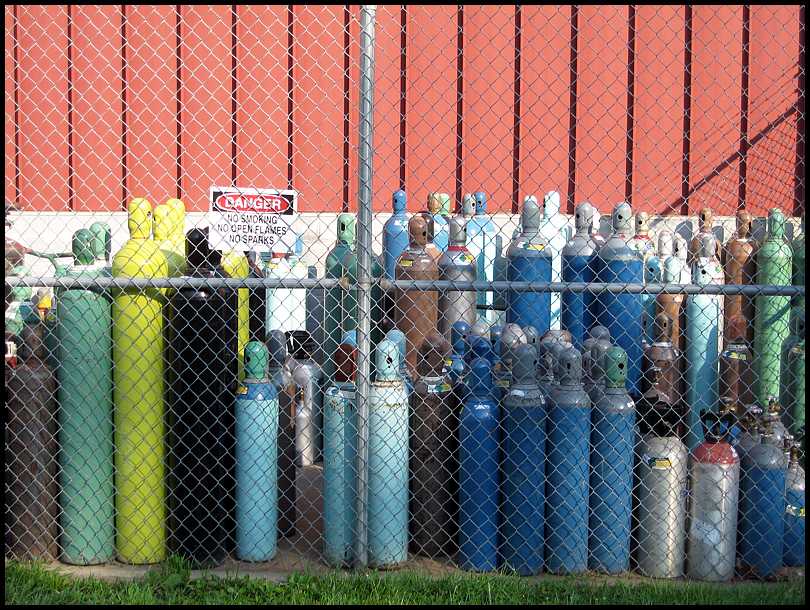
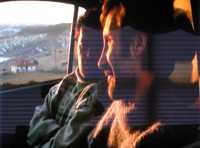
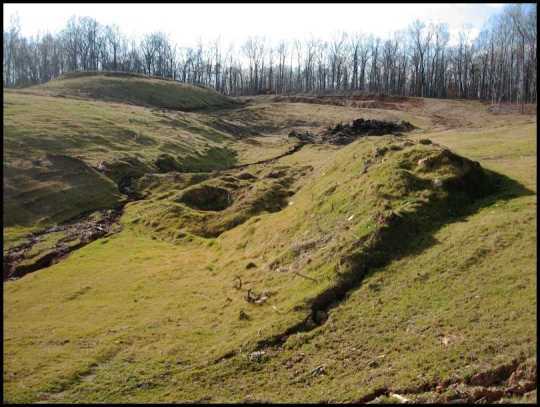
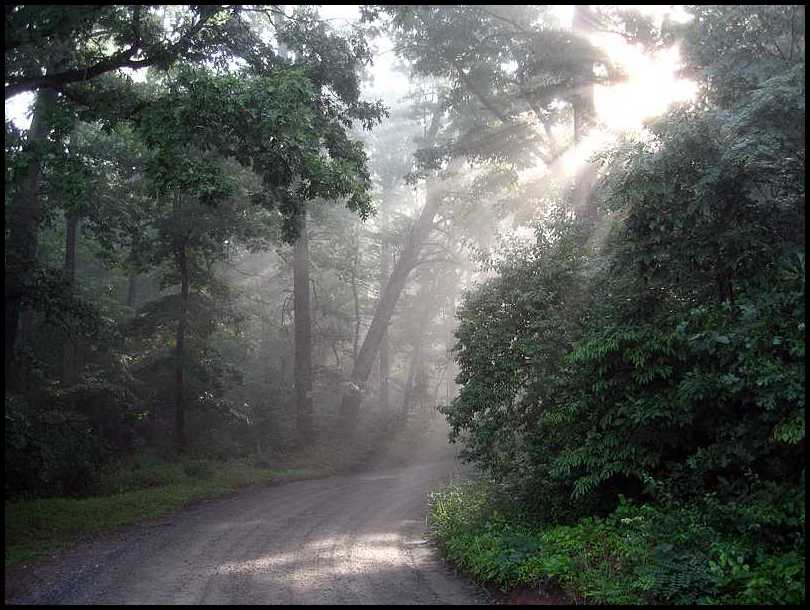
I proceeded around the house for about four hours, then did three set ups outside. The light was perfectly clear, the sky nearly cloudless. Not exactly the light I consider "perfect" for photographing architectural subjects, but certainly what we humans consider beautiful weather for every day enjoyment of life. The photo above is one of the last I took for the day prior to departure from the location. It's only real significance is that it's part of an incredibly lovely afternoon landscape.

The drive home was on roads that I've travelled hundreds of times previously, but somehow, through the intensity of my concenration during the prior four or five hours, took on the appearance of places that I had never seen before. My ordinary life was momentarily lost to me, banished by an activity so satisfactory that it borders on pleasure.

No doubt this is the ideal state for humans. The challenge is to find what the activity is that gets you into "the zone" the most efficiently and doesn't interfere with the rights of others. Anybody else care to add what works for you?

Monday
Sep292008

we carry on

A bad month for the living, for those of you living under a rock:

Paul Newman 1925 - 2008 - A phenomenally well accomplished individual who lived a full life. He raced with my brother.

David Foster Wallace 1962 - 2008 - What a tragic loss. Little did I know when I wrote about him here and here that there wouldn't be any more coming from his pen.

Peggy Lane Desel 1928 - 2008 - My mother-in-law left us quickly. Not necessarily painlessly, but she didn't linger long, something we all hope for. Saturday's memorial service had a very respectable turn out, despite the inclement weather.

Tuesday
Sep232008

an image


click 'er for bigger

Same location - some time later.

Thursday
Sep182008

before the blue door


click 'er for bigger

This one's from directly across the street from the previous entry. Obviously too far away to see anything at all, other than that it's a "pitcher book." I'm still trying to figure out the range, how close I need to be to really see what's going on in the book's picture and still have a "meaningful" surrounding that I can select and capture.

As a gauge, Shore has three photos in Uncommon Places that are overtly of pictures, either painted or photographed. What is most interesting about them to me is the relative distances between the surfaces of the pictures he is photographing and the surfaces on which these pictures "hang." One is a billboard in a spectacular natural landscape. Another is a painting of a northern Italian landscape hanging on a plain white concrete block wall. The third is a painted mountain landscape hanging on a wallpaper covered surface printed with images of Native American artifacts. The latter is more interesting for the wallpaper the picture hangs on, so the image more or less pushes the viewer outside the frame. The Italian landscape is a deep well that you fall immediately into, even while still holding onto the block wall around it. And the billboard with it's blanked out text is also a surface that pushes the eye outside it's frame, to have you pay more attention to the natural surroundings in which the billboard has been placed.

Sunday
Sep142008

an appropriation or an homage?


click 'er for bigger

And so begins something new. I'm always hesitant to broadcast much of anything about ideas for projects, being paranoid about other people taking an idea before I can do anything with it, or more likely it being a lot of hot air about something that never materializes. But it appears I'm going to make an exception this time. At least in the near future I'm going to see what I can do with some of my favorite photo books. The one I'm currently in thrall of is Stephen Shore's Uncommon Places. I might even experiment with the experiments here. See what comes of it. On the surface, the book is a collection of 8x10 photographs of Shore's cross country travels in the early 70's. I feel like some of us are still working the vein.


There's another way that an 8-x-10 photograph bears a funny relationship to time. I have a camera and a tripod. I can spend several minutes looking at the scene in front of me, I can pay attention to small details, I can see relationships in space that may not reveal themselves, and have all of this inform a picture which is then taken in very quickly by the viewer. So there is a kind of compression of time in the picture. That to be there and to see everything the camera sees could take minutes; but it can all be grasped at once on this piece of paper.
Stephen Shore Uncommon Places 2003
Sunday
Sep072008

fight the power

Is it it's ubiquity, or it's multiplicity, or it's technology that delegates photography to second class citizenship in the Art world? Or has it changed? Well, certainly to a degree. Look at the prices in the big name galleries. But the problem is a prevalent  attitude through the culture. I encountered it again in the final story in David Foster Wallace's Obivion collection, "The Suffering Channel." He heads in two distinct directions with the piece, but finally brings them together at the end. In a sense, the piece might be considered a mini Infinite Jest.

The story is a blatantly subversive discussion about art and its authenticity, which anyone involved in the art process or production would be wise to read. On the surface it's about the inner workings of the magazine publishing culture. During a brainstorming session, two very smart interns at Style magazine have this exchange,


     'But is the physical, so to speak handmade character of a piece of art part of the artwork's overall quality?'
     ...The executive intern responded: 'Do we all really value a painting more than a photograph anymore?'
     'Let's say we do.'
     The executive intern laughed. 'That's almost a textbook petitio principii.'...
     'A great painting certainly sells for more than a great photograph, doesn't it?'
     The executive intern was silent... Then she said: 'Why not just say rather that Style's readership would not have a problem with the assumption that a good painting or sculpture is intrinsically better, more human and meaningful, than a good photo.'
     ...Ellen Bactrian said: 'But now, if we agree the human element's key, then does the physical process or processes by which the painting is produced, or any artwork, have anything to do with the artwork's quality?'
     'By quality you're still referring to how good it is.'
     ...'Good quote unquote.'
     'Then the answer again is that what we're interested in is human interest, not some abstract aesthetic value.'

As producers of such consumables - photographs - with such a wide range of effort expended and results achieved, it's going to be difficult to ever disagree with this conversation.
Thursday
Sep042008

Hyphantria cunea

click 'er for bigger


Don't worry, they didn't get away. Horribly P.I. indeed, but nonetheless I doused them and toasted their asses. At least they made for some interesting photos.


click 'er for bigger, 2

Wednesday
Sep032008

something else about something else

The August 2008 issue of Focus Magazine has several worthwhile articles. This is the first issue I've seen. It's pretty slick looking, maybe too much so for my tastes. But the quality of printing is certainly extraordinary, and the interview with Joel Meyerowitz is an intriguing one.

Here's the piece that really caught my attention:


The question for me is, can I move away from the Pictorialist, Renaissance perspective point of view that photography does as a given, and instead make something that is a different kind of space closer to the two dimensional space inside photography...The phenomena require an immersion into the experience, rather than a picture of it from far away...

But can you do it with a photograph in a gallery, a museum setting that allows you to offer the viewer an experience of the phenomena like the original, without making a picture of it that conforms to tried and true methods of perspective and illusion.

Meyerowitz's search for a photograph inside the experience has led him to photograph the elements, prints of which have been displayed in Cologne, New York, and Tokyo. In a sense, much of the history of photography is about trying to recreate the photographer's experience for the viewer. Some from farther away than others, but much of photography has been documentation about what it was like to be there. Something that tries to transcend the "tried and true methods of perspective and illusion" is bound to be something to see. Anyone out there who's seen the prints got a comment about his success with getting the viewer inside the experience?
Monday
Sep012008

what was I thinking?

My awe and enthusiasm have waned in the intervening hours since dinner. It's not usual for me to say much of anything about tech, but this one is so cool I've got to mention it.

My brother loaned me his D70 a month or so ago to play with to learn about flash photography. That's been coming along. I won't bore anyone with details. I've become the most cooperative model I know... The most recent work has been within the house using the flash to light bits and pieces of rooms, usually with a lamp and a window somewhere in the frame. I've used my Sekonic meter to get a flash reading, then change the percentage readings and vary the settings on the camera accordingly. This has worked fine, but the problem is learning anything from this requires downloading the images to the computer and looking at them there.

Roger suggested Camera Control. Whoa... After installing it twice, charging the battery, changing the USB port setting on the camera, damned if it didn't work! Set the camera on a tripod, connect to a laptop via USB cable, and most of the basic functions (and a lot more) can be controlled from the computer, and then view the image on screen, instead of the shitty little LCD. Great for studio work, that's for sure. Or any kind of remote photography. In fact, with the addition of another $580 wireless device, you can connect the camera to a WiFi network and go wireless. Wouldn't that be too cool? On top of that, the newer more expensive cameras (Nikons) will generate a live feed to the computer.

I can see that these are the tools I should be using for the architectural photography that I've started to do. Especially with interior lighting, it's nice to be able to get instant feedback on the settings that work the best. One more example for me that there is no reason to do any commercial photography using film. I still prefer using the view camera, but these digital tools do way more a lot faster. For the sizes that I'm likely to need for people, a current SLR is likely to have plenty enough quality.

Alas - another nail in the coffin. I exposed five pieces of 4 x 5 film in the past three days, and it was still a lot more fun. Not as gee wizz, but still ultimatley more satisfying. I see a possible division of tools coming: more digital capture for other people, architecture, and that sort; continued use of the 4 x 5 for more personal work which I might want to print larger.

Tuesday
Aug262008

something else


click 'er for bigger -
my
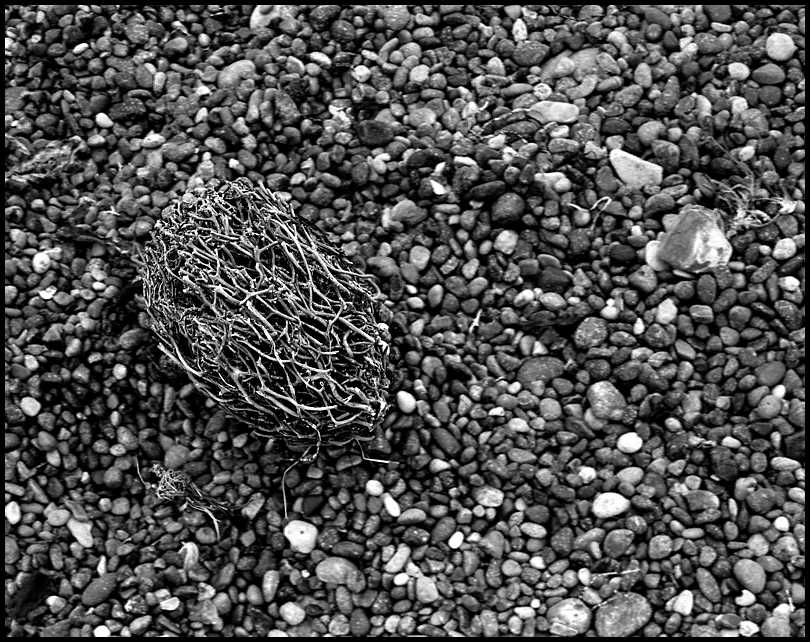
homage to the Westons - from Weston Beach, Point Lobos State Park April 2007


Going back to one of the early greats, I've recently been through Photographs From Five Decades by Brett Weston. On page after page are phenomenal black and white images. Second son of Edward, Brett was a master at seeing the world for photographs. Remarkably, he was taking pictures of car rust, chipped paint, broken glass, and ice forms as far back as 1935. We're still seeing the world through his eyes, 70 years later. He was doing photographic abstraction during a time when painters were doing the same with paint.  In the included profile R.H. Cravens writes,

An intriguing quality in Brett's work is that the greater the distance his lens encompasses, the less movement there is. The closer the subject, the more intense the rhythmic relationships.

It is the images which "encompass the greater distance" which are the more traditional windows on a beautiful world. On the other hand, the "closer subject" asks to be viewed as it is, for its surface reality, its shallowness. Yet they are the most successful and challenging. But I suspect it's time to find something else to work with.

Cravens quotes Brett,

Hell, it's all been done - rocks, nudes, dunes, kelp. But nature is such a magnificent arranger, and it is - all of it - always changing. You have to have an almost microscopic sense, a discerning, restless eye.
Perhaps so, but there is only so much tolerance for pictures of more rocks, nudes, dunes, and kelp, even if they are done in a "new" way.

Brett also says,

You fall in love with the image right off, but the judgment is a long time coming.

I'm still self editing, perhaps too heavily. What the something else is I'm still searching for.


Sunday
Aug242008

far from the last word


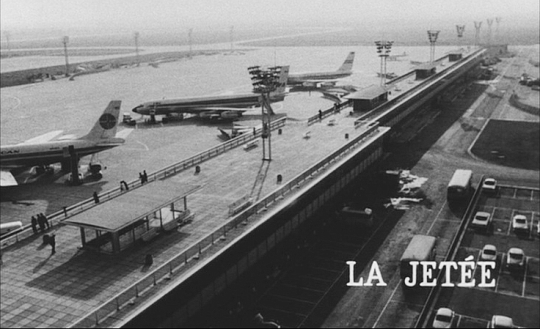
Dating from 1963, directed by Chris Marker, it is one of the more influential pieces of cinema in the latter half of the 20th century. Why it's taken so long to see it again, I'm not quite sure. It's been on the queue for months, and finally made it to the top. Possibly one of those pieces of work that you know is supposed to be fabulous, but is so out of currency that it becomes something like a chore to watch it again?

The credits actually list Marker as the creator of this photo-roman, rather than as le directeur. According to the included interview with Marker's friend Jean-Pierre Gorin, they were a form of popular entertainment in post-war Italy and France. It's not clear whether La Jetee was the first of its kind, to be put on film rather than paper, but certainly through the usage of montage and sound, it achieves a remarkable sense of movement and story telling. A film about time travel from a post apocalyptic Paris, this collection of still images put on film has a remarkably gentle tone to it. The connection between the male prisoner/time traveler and the woman he meets regularly in the past is not a typical film romance, but a meeting of individuals giving freely.  Marker is primarily interested in memory and time, both particularly well suited to investigation through images and their manipulation. Adding density to the story, he makes reference to Hitchcock's Vertigo, another film concerned primarily with images about memory, time, and image.

Although it's been since 1975 that I last saw this 25 minute classic, and nothing in particular was remembered about it other than it's structure and look, the power of the single moving image - set amidst all the other stills - in which the woman blinks her eyes has never been forgotten. This lone shot - using the artificiality of motion pictures which is after all nothing but a succession of still photographs which our minds put together as movement due to the persistence of vision - shatters the simplicity of the remainder of the film, moving it to a level of abstraction and obvious greatness.


Monday
Aug182008

no news is good news

You won't see or hear me bouncing off what's happening elsewhere on the worldwideinterweb very often. I can only consume so much of it to begin with. But the basic problem is that in essence it's commenting on the news. There are many in the world of talk radio who have no program without the function of commenting on the news. The first I ever heard was Stern, some time back in the mid 80's when he was on NBC radio in New York and talking about his prostate. Rush and his ilk rely on the news a great deal, and now the blogosphere does the same. They have lots of dead air to fill. I'm one guy at a keyboard with no qualms about being silent if there's nothing to say.

Sunday
Aug172008

we might be green!


Feeling oh so very righteous about our recent train trip on Amtrak, I decided to look into what the media sources have to say about what's going on with this federally subsidized entity. While ridership on the railroad is up nearly 14% for July of 2008, probably due mostly to increased fuel costs for auto travel, and certain routes on certain dates are sold out, it's obvious that Amtrak is struggling to keep up service and on time records. In fact, they don't really want any more riders. The equipment in use is often 30 years old, and on some routes is already filled. Our travels between Charlottesville and Washington led us to believe the Crescent is well used and nearly full of passengers. But what happens to the ridership as the train heads into North and South Carolina?

It was the leg between Albany and Montreal that was the most problematic in terms of efficiency and time savings. The Transportation Energy Databook shows that Btu's per passenger mile for autos is 3512, and for Amtrak it is 2650. But this is over the entire system, and the Adirondack would have to be far from one of the more efficient routes. The roadbed north of Saratoga is pretty worn, limited to a single track that must be shared with freight. Add in the two hour + customs delay each way at Rousses Point for the border crossing between the U.S. and Canada, and the frustration level rises along with the inefficiency.

All of which still doesn't negate the carefree feeling of traveling without a car - or should I say carfree feeling of traveling without care? By it's nature this sort of travel necessitates that one visit larger, more populous destinations. To an extent this is fine. But I think we may be souring on travel to large and mid sized cities where trains are located. It was certainly a pleasant alternative to be able to go away for a week and not be concerned with driving, parking, fueling. (Although it must be confessed that we took advantage of Mark Hobson's offer of a free car and a house while visiting in the Adirondacks.) Having not been to any of the stops before - other than Manhattan island - we were perfectly satisfied with the range we were able to reach on foot and via buses and metros.

But the train... I keep coming back to trying to describe the train experience, for I think that's what this entry was really supposed to be about. There is no question that long distance train travel beats flying or driving in a car or a bus. It may not be inexpensive. But most likely the true costs of the other three modes are not really calculated into the fare. Well, trains probably aren't either. Even at the prices charged, the system still needs annual governmental support. The ability to move about the train while traveling through the landscape is surely the most attractive feature of this mode of transportation. The seats and legroom are larger than the other three modes. Add in the ability to bring electronic devices for computing and watching movies or teevee and listening to music to the traditional diversions of reading and sleeping (for some individuals - I always get a sore neck when trying to sleep sitting up), and there is usually plenty to keep you occupied for several hours. Beyond that, when approaching six or seven hours, the confinement factor begins to be a group malaise. Everybody wants to get out of there, and shows it with the endless pacing back and forth to the cafe car and the restrooms.

So what the hell has this got to do with photography? Not much, but here are a few snaps from our train experience. (Click the lead image twice to start a slide show.) I'll try to get more material together in the coming week.

Thursday
Aug142008

some travels north - and a return


TAKE 2:

We've traveled far and wide, and landed back in pretty much the same place we departed from. Fancy that...

The farthest we journeyed was Montreal, yet another big city. I think we've had about enough of them for a while. Not knowing it very well, it seemed we were destined to experience the tourist attractions and hordes. As in the Biodome, a location that we probably should have skipped, but managed to attend along with several thousand parents and their baby strollers.

Our hotel, the Auberge du Vieux Port, is in a great location in the old part of the city, and the people there are wonderful. But my heart sank when Frederick took us out the back door, along Rue St. Paul to Rue St. Gabriel, and I saw the tee shirt shoppes.


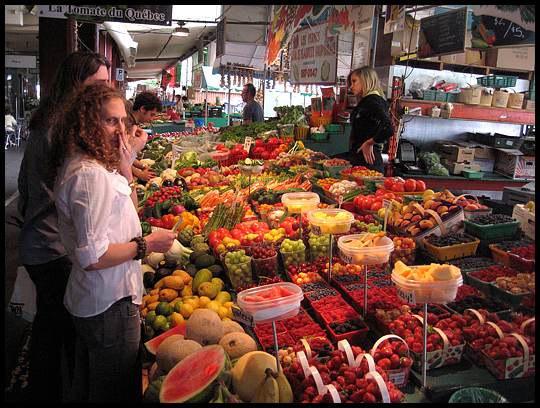
The more fabulous sight was the Atwater market, a large city block of permanent shops, primarily food, with the fruit and vegetable vendors on the perimeter of the building under movable tarps, and the butchers and cheese and bakeries on the inside under a solid roof. A beautiful location that is largely for the locals and remains undiscovered by the touristas.


One of our more remarkable visits was with Landscapist Mark Hobson in Au Sable Forks, N.Y. He was generous enough to lend us the use of his house (while he and his family were away in North Jersey for a wedding) and a car. Fortunately Mark was able to return in time for us to have a personal encounter, after nearly two years of comments and contributions to his blog. We spent an afternoon and an evening that concluded late, and part of the following day in conversation about family and photography. Such generosity, which included complimentary passes to Lake Placid events courtesy of Aaron Hobson, surely deserves special mention.

Somewhat reluctantly, I reacquainted myself with the Mamiya 7II kit that has sat on the shelf for most of the past year. CLW and I have worked with it recently to come up with our annual photo/birthday gift. But I was hesitant to travel again with this camera because I've become so accustomed to working with the two 4 x 5's that are my usual tools. Getting on and off the train multiple times in ten days was what convinced me that the 7II was ultimately the camera to take, and I'm happy that I did. It's interesting that the use of the large format has taught me how to work faster with a smaller camera. This trip, although I carried a tripod, it wasn't necessary much of the time, now that I've learned from the 4 x 5 how to maximize on DOF. I'm not quite certain why I was always shooting at f/22 when using the Mamiya. It's certainly not necessary. So all the work that I did while travelling through Manhattan was done sans tripod. As a rangefinder tool, it's the perfect medium format camera to use off the tripod. With the use of a new (to me) emulsion for some of the exposures - Portra 400 - I was always able to work in the f/8-11 range. Some of this material should appear here during the coming weeks as I work my way through the ten rolls of 120 film.

Friday
Aug012008

a pause

It's going to be quiet around here for a while, but I'll be back in due time. Don't abandon me, I've not given up completely...yet.

Saturday
Jul262008

more late night viewing

UZAK - Distant


A 2002 Turkish production, Uzak is set in a thoroughly modernized Istanbul of wintry emotions and lowered expectations. The downsized factory worker Yusuf begins the film with his trek across a snowy landscape from a small river town and ends it by staring at his future from the balcony of his cousin Mahmut's apartment in Istanbul, a city of equally frozen prospects. The idealism of youth is soon overcome by the realities of even the most simplistic existence. During a small gathering of photographer friends, Mahmut is accused by another photographer of abandoning the ideals of his youth, when Mahmut claimed he would make films like those of Tarkovsky. Mahmut says that "...photography  is finished... photography is dead."


Shortly after this gathering, Mahmut and Yusuf are in Mahmut's apartment watching a video of Tarkovsky's Stalker, during one of the long takes of the early train ride into The Zone.

 The unsophisticated Yusuf bails on the film and goes to bed. Mahmut continues to watch, but as soon as his cousin has closed his door, removes the Tarkovsky tape and begins to watch some unknown porn.


The primary question posed to the viewer is: why has this self made small town success abandoned his art and become a commercial hack who photographs static ceramic tile for a tile manufacturer? Is photography really dead? Or is it dead only for the director Nuri Bilge Ceylan, a  photographer himself?  Or only to  Mahmut, who has lost the idealism of his youth? Most likely the latter, for Mahmut's challenger Arif  asks which he Mahmut prefers, "Photogtraphy or women?" There seems to be no real answer from Mahmut directly - his use of porn and prostitutes is clear enough an answer -  but Arif answers for him, "I prefer photography."

Meanwhile, his unemployed cousin Yusuf wanders around a snow filled Istanbul in search of a dream job that doesn't exist, refusing to tell the truth about his prospects to either his host or himself. Eventually he disappears without any announcement or traces, other than some cheap cigarettes Mahmut finds between the wall and the couch.


Earlier Mahmut had railed against Yusuf for smoking such "shit" that was commonly consumed by the sailors Yusuf wanted to join. Yusuf's idealism crushed also, we're left with the image of his cousin, the sophisticate and equally as dissolute photographer, watching the harbor with boats busily steaming past as he smokes the last of Yusuf's ordinary cigarettes.

The distant of the title rather explicitly refers to the separation the characters feel from each other, from their environment, from themselves. Not a particularly cheery or unique view, but one well rendered nonetheless.


Wednesday
Jul232008

a printed "Landscapist"


Mark Hobson, of Landscapist fame, has in mind to print a quarterly version of the blog. He's calling for submissions. All types of photography, with a minimum of text, are acceptable.  Apparently he's looking at some kind of POD model, about which I know ziltch. Look at this entry to learn more. BTW, it has a great "picture window" photo @ the top of the entry.

Monday
Jul212008

upgrade - whether you want it or not


Yikes! A good thing I finally looked at the Landscapist again. Mark's entry for today alerted me to the "upgrade" we've received by the Squarespace host. It's going to take some time to get it sorted out again, back to some semblance of what it had been. I've lost my banner and have been changed to a three column format that doesn't really suit me. Hang on while I go through the necessary changes to get things to look better. It doesn't appear as if there's any going back to the old layout. It is possible to revert to the original manmadewilderness layout, but apparently functionality is diminished. It's time for a new look here anyway. Any comments about that?

Monday
Jul142008

almost fallen by the wayside

 IMG_6334_800.jpg

1561352-1727852-thumbnail.jpg
click 'er for bigger
 

No doubt there should be some kind of "post op for the workshop." If I was more prolific there would surely be something of consequence to say. Since that's not the case, and not much has transpired photographically, perhaps it's time to write about other media.

Without meaning to pile on the bandwagon, I've still got to comment on some recent reading. It's been both non-fiction and fiction, by the same writer: David Foster Wallace. The man is scary he's so good. Two weeks ago I was reading Consider the Lobster, a collection of pieces that originally appeared in periodicals such as Atlantic, Gourmet, The New Yorker, Rolling Stone, and others. Despite his tendency to run-on and lose the reader in the convolutions of his asides & footnotes within footnotes, he has a remarkably democratic outlook that never fails to illuminate. Whether he's writing about Porn star awards, dictionary wars, Rabid Right Wing talk show hosts, the McCain2000 campaign trail, or lobsters, his sympathetic outlook inevitably expresses some universal thought, but in a much more eloquent and clearly defined manner than anyone else is able to put it.

Now I'm into a more recent collection of D.F. Wallace fiction in the book Oblivion. His language tends towards jargonese, but only that used by the characters he's writing about. The opening piece "Mister Squishy" is a fascinating and damning deconstruction of advertising and the use of focus groups and statistics to "give consumers what they want." In the midst of his instructions to the latest focus group giving feedback on some snack cakes called Felonies, the facilitator manages to range through a vast internal commentary that might be best expressed thus:

...no no all that ever changed were the jargon and mechanisms and gilt rococo with which everyone in the whole huge blind grinding mechanism conspired to convince each other that they could figure out how to give the paying customer what they could prove he could be persuaded to believe he wanted, without anybody once ever saying stop a second or pointing out the absurdity of calling what they were doing collecting information or ever even saying aloud... what was going on or what it meant or what the simple truth was. That it made no difference. None of it...

In the end, Wallace's revelations are ones we've considered ourselves - albeit in abbreviated form - whereas his mind and imagination fully details them for our edification. He's a master at telling us what we already think for ourselves.

Sunday
Jun152008

where does this leave us?

IMG_6134_800.jpg
 

1561352-1647467-thumbnail.jpg 
click 'er for bigger

Knowing I can usually knock these kinds of images out without too much trouble, I opted to do something completely different. I had the time, so all I had to do was make the effort. In fact my efforts went beyond my capabilities to keep up with them on film. At some point during the week I must have gotten in contact with four or five more people than I could find the time to go photograph.

So yeah, the project for the week - which really managed to center me for the workshop - was to photograph people working. It's an expansion of my efforts to get pictures of construction people. There was some of that, but rather broader too. I was concerned now and again that it was too broad, but it served as a suitable excuse to work with as many people I know as possible. If I'd not come up with a "project" like this, I know I would have really been lost @ sea. Others in the group expressed some serious feelings of disorientation because they had to find something to photograph in such a short period of time without knowing much of anything about Charlottesville. In a way, I wish I could have been more assistance to them. But alas, I was already by the second day rather deep into a schedule of appointments with a variety of people.

Tuesday was my heaviest day of work when I returned to the Coiner scrap yard and spent some time meeting and talking to the operator of the Liebherr trackhoe in the yard. Eventually I got a couple of photographs of him with the machine. Bill wasn't impressed. From there I stopped at the Laundry Building to see who I could find there. Fortunately Ed Brown of  Frontrunner Signs was there, and we did two exposures. Bill thought they were overexposed. Ed called around to the other side of the building for me to where his wife Tavia shares space with Martha Keith. I got a couple of really nice exposures with Martha, and had a wonderful conversation with her during the process, primarily about tools. (She may have more than I do.) I was rather nervous during the setup, because it was such a lovely setting and I didn't want to screw it up. My out loud thoughts were that I felt like I had to rely to a certain extent upon habitual processes, running in worn grooves through somewhat mechanical procedures in order to be assured that the check list is worked through. Results are satisfactory, although focus is on Martha's hands rather than her eyes. Once again Bill was unimpressed. After class - actually during it, I had to cut out early to make the appointment - I headed over to the university to work with Dave Metcalf in one of the lecture halls. Wide shot, closer, closer. Five exposures, three different emulsions, all fine in terms of exposure, but because they were in the 3 second range, Dave is not particularly sharp. Bill didn't even really look at these.

A wonderful day in which I think a learned a fair amount about working with people and setting them in an environment and giving some direction. What I've also learned is that I can do this "project" with the 4 x 5, but that many of the places I would like to go are inside, so some kind of supplemental light is going to be necessary due to the inadequacy of existing "natural" light and the horrendous color that it often is. I've got to learn how to work with flash, most likely even if I was to work exclusively in b&w - which I don't think I'm inclined to do. This is the piece of equipment I've neglected the most, and now that I'm doing people, it's the one that I need to learn the most.  I'd like to be able to practice with some digital equipment, but have nothing that will synch with an external flash. The excuse til now has mostly been that I didn't want to be burdened with another piece of equipment to set up and bother people with. But if I'm going to go to the trouble to meet with people and disrupt their schedules to pose for me, then I need to be sure that I'm getting something useable. Unfortunately, I don't think the exposures with Dave are useable beyond contact print size.

All in all, not much personal feedback from Bill Allard. The comments that he made over and over during the few days we were together: "Take it apart. Break it down." Eventually I heard him add what we were supposed to do after that: "Put it back together." What he was trying to get at is to look at every element in the composition and move the camera to a position so that all those elements communicate their respective importance as powerfully as possible. His amazing ability is to read nearly every inch of a photograph in a split second. With that ability one is able to make the slight adjustments that might be necessary to improve the clarity of the composition. The other question we heard over and over was: "Is it sharp?" To which Michael Bednar proposed to paraphrase Dustin Hoffman's answer in Marathon Man. "Oh yeah, it's totally sharp."